Top Best Cybersecurity Projects
Federated platforms allow multiple organizations to collaborate on threat detection without directly sharing their sensitive data. Unlike centralized systems, each entity maintains its autonomy and privacy while contributing to a collective intelligence network.
What makes them relevant in 2025?
They integrate federated learning models to correlate events without exposing confidential information.
They use isolated containers that share only essential metadata.
They are suitable for critical sectors such as healthcare, defense, and banking.
📌 Strategic Analysis: This decentralized approach not only improves security but also democratizes access to advanced intelligence. Defense no longer depends on large corporations but on distributed networks that learn together. Furthermore, open source allows for auditing, customization, and scalability without relying on restrictive licenses.
These networks are alliances between governments, technology companies, universities, and research centers working together to improve national cybersecurity. They are no longer isolated initiatives, but critical infrastructure.
Current examples:
In Peru, the Cybersecurity and Cyberdefense 2025 Program involves the Ministry of Defense, the Secretariat of Digital Government, and the Cisco Networking Academy.
In Europe, projects like Red-Innova 2025 promote cooperation between companies and research organizations to validate emerging technologies.
📌 Strategic analysis: The most valuable aspect of these networks is their ability to unite worlds that typically operate separately. When the public and private sectors share a vision, defense becomes more agile, contextual, and aligned with the real challenges of the digital environment.
Interoperability allows different tools, platforms, and actors to communicate seamlessly. Traceability, meanwhile, ensures that every defensive action can be audited, explained, and validated.
Key trends in 2025:
Adoption of common taxonomies such as STIX/TAXII for security events.
Open protocols that allow for the integration of heterogeneous systems without losing context.
Cross-validation between defensive layers to avoid false positives and improve response times.
📌 Strategic analysis: Without interoperability, defense becomes fragmented. And without traceability, trust is lost. Projects that prioritize these standards are not only technically sound but also institutionally reliable. In regulated environments, this makes the difference between a functional solution and one that can scale globally.
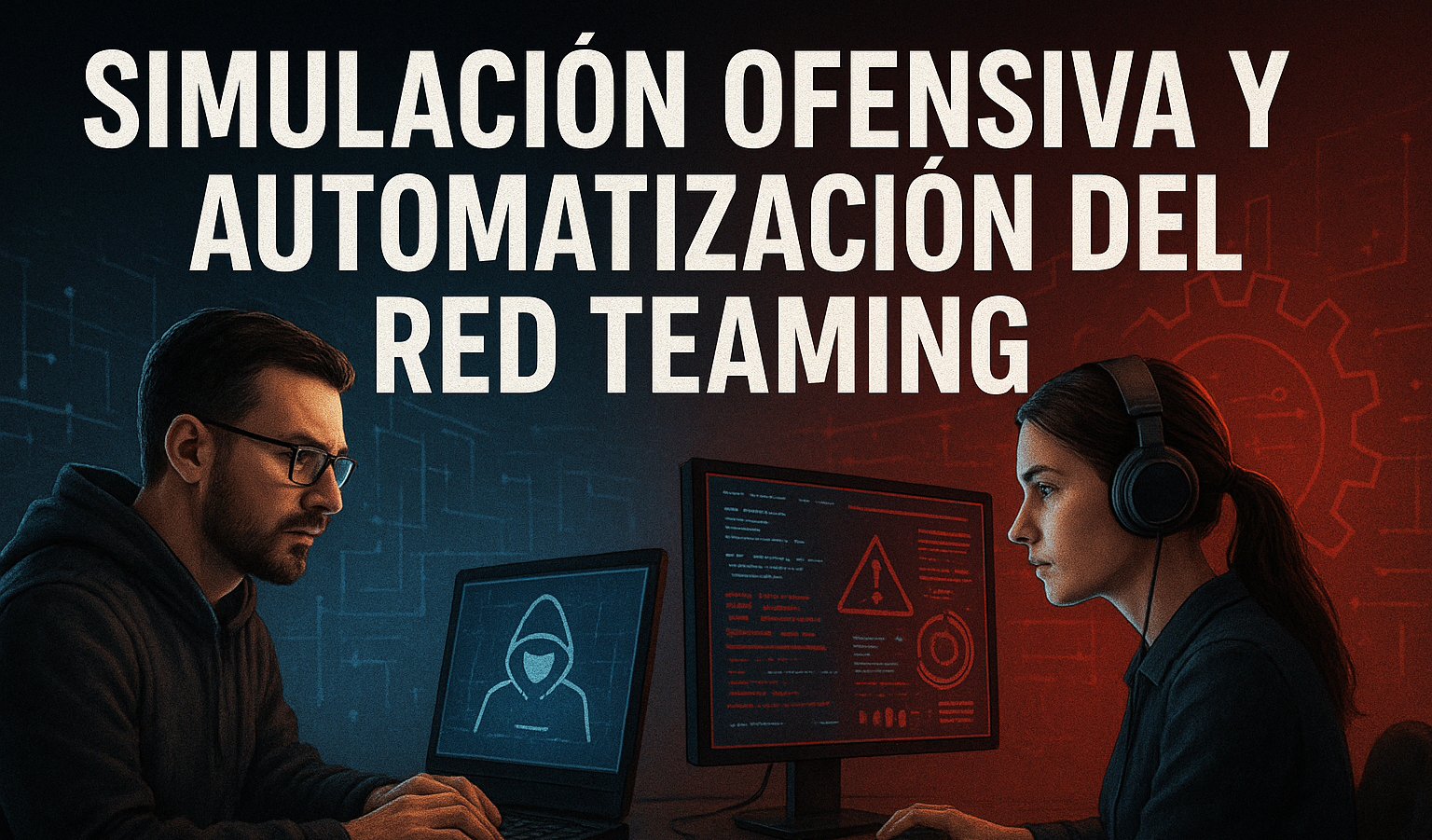
In 2025, Red Teaming exercises—controlled simulations of attacks to evaluate defenses—have evolved thanks to artificial intelligence. They are no longer just about predefined scripts or static scenarios. Today, the most advanced projects integrate AI to mimic the behavior of human attackers, adapting defensive responses in real time.
Real-world example: The Second International Cyberattack Simulation 2025, organized by the PCM in Peru, used realistic technical environments to evaluate the response capabilities of public and private entities.
📌 Strategic analysis: The disruptive element is not just automation, but AI’s ability to improvise. This forces defensive teams to think beyond established strategies and prepare for the unexpected. Simulation is no longer a routine exercise, but a tool for continuous discovery.
Generative models, such as those based on Transformers, are being trained to create payloads, scripts, and attack vectors that mimic the style of real malicious actors. This technique, known as synthetic attack, allows for testing defenses against threats that don’t yet exist but could emerge.
Key features:
Generation of phishing emails indistinguishable from legitimate ones.
Creation of malware without a detectable signature.
Simulation of highly personalized social engineering campaigns.
📌 Strategic analysis: These models are not only useful for attacking but also for anticipating attacks. By generating plausible threats, they allow for training defensive systems before real attackers use them. This is a form of algorithmic proactivity that redefines the preparedness cycle.
Unlike traditional scanning, dynamic AI assessment involves observing how a system behaves under pressure, in real time. This includes analyzing how it reacts to malicious inputs, how vulnerabilities propagate, and how quickly anomalies are detected.
Emerging techniques:
Intelligent AI fuzzing to uncover logical flaws.
Simulation of complete attack chains (kill chains).
Correlation between technical vulnerabilities and their operational impact.
📌 Strategic analysis: Assessment is not just about listing CVEs. It’s about understanding the context, the actual attack surface, and resilience. Projects integrating AI to map vulnerabilities in real time are setting a new standard in offensive cybersecurity.
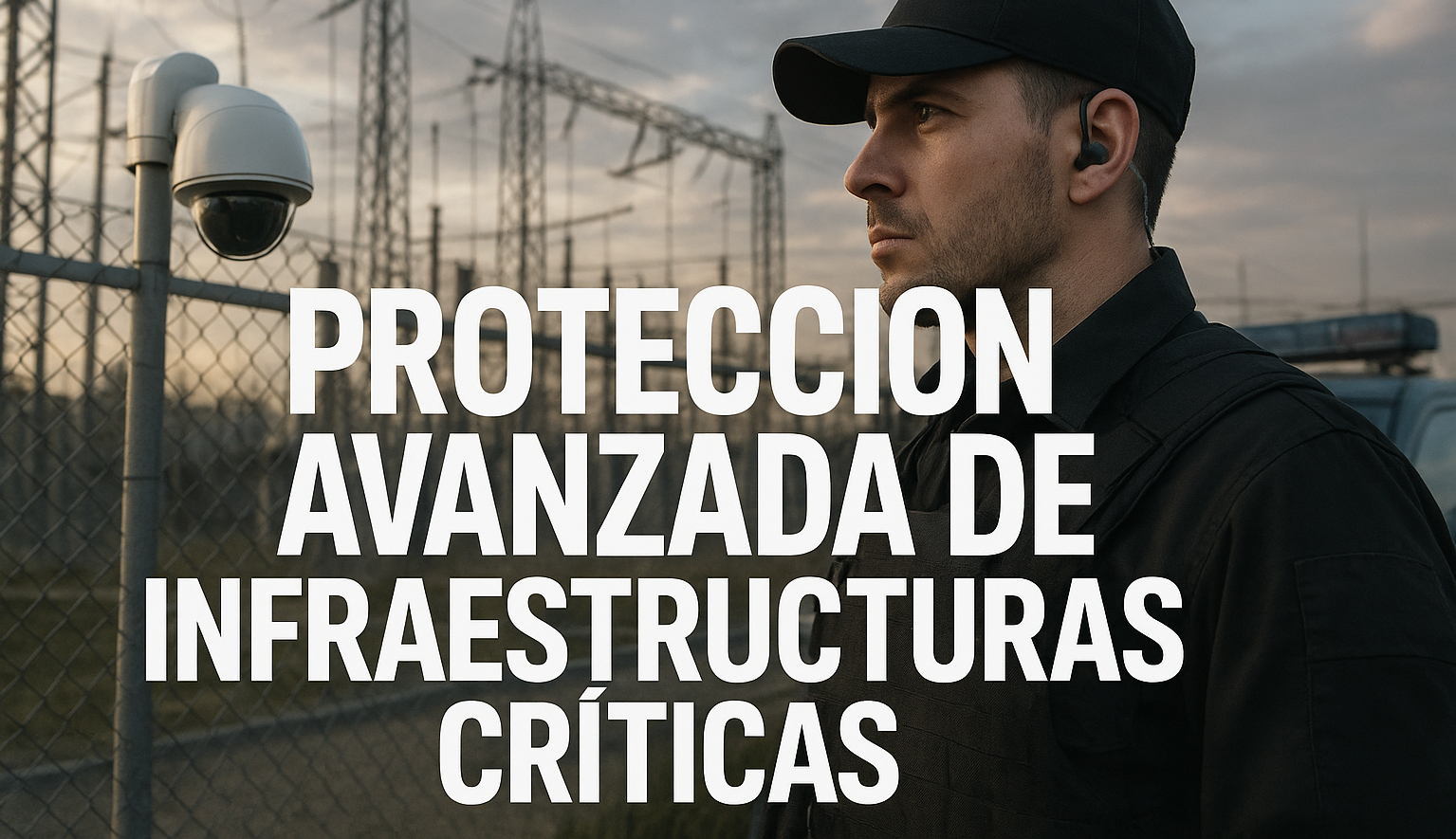
OT (Operational Technology), IoT (Internet of Things), and SCADA (Site Control and Data Acquisition) systems are essential in sectors such as energy, manufacturing, and transportation. However, their traditional design prioritizes functionality over security, making them vulnerable to persistent attacks.
Key trends in 2025:
Integration of Security Fabrics tailored to industrial environments, as proposed by Fortinet.
Application of micro-segmentation to isolate critical assets without interrupting processes.
Use of AI-powered SCADA sensors to detect anomalies in real time.
📌 Strategic analysis: The key is not adding more firewalls, but redesigning the defensive architecture for environments that cannot tolerate latency or downtime. Projects that understand this operational logic are achieving robust security without slowing down operations.
Continuous monitoring involves observing and recording operational variables in real time to detect deviations before they become incidents. By 2025, this practice has been enhanced with prescriptive AI, which not only predicts failures but also recommends corrective actions.
Key components:
Digital twins that simulate the behavior of physical assets.
Correlation algorithms that prioritize alerts based on operational impact.
Adaptive dashboards that integrate data from multiple industry sources.
📌 Strategic analysis: It’s not about monitoring more, but about interpreting better. A system that detects a fluctuation in the pressure of a critical valve must contextualize it with the operational history and the physical environment. Contextual intelligence is what transforms monitoring into defense.
Cyber resilience is the ability to anticipate, withstand, and recover from attacks without compromising operational continuity. In sectors like healthcare, energy, and transportation, this is not optional: a failure can put lives at risk.
Key projects in 2025:
Hospital networks with algorithmic redundancy to maintain critical services.
Electrical systems that isolate faults and automatically reconfigure distribution routes.
Transportation platforms that detect digital sabotage and activate contingency protocols.
📌 Strategic analysis: Resilience is not measured by how many attacks are blocked, but by how quickly the system recovers without losing functionality. Projects that combine AI, redundancy, and fault simulation are leading this transformation.
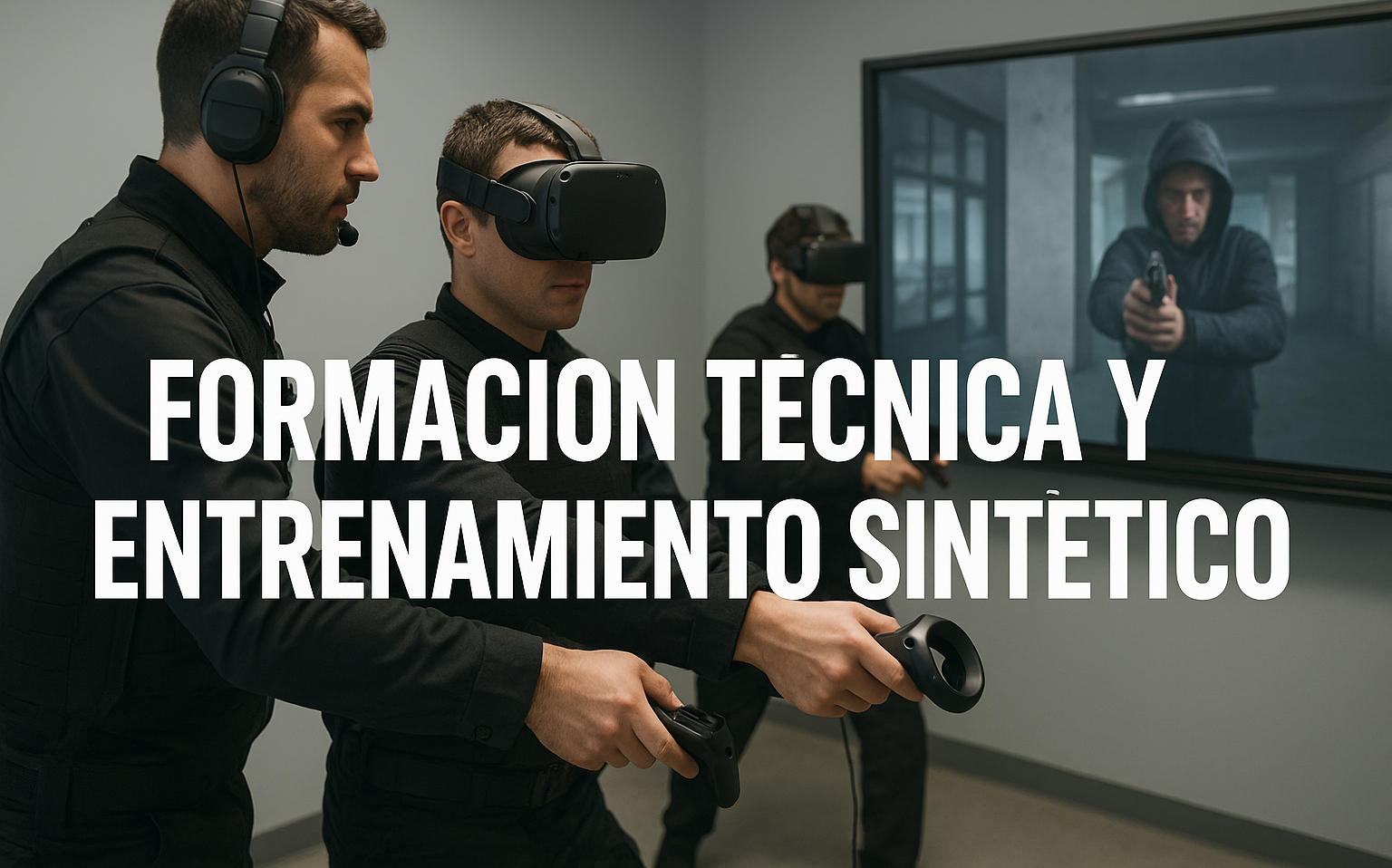
Virtual labs are controlled environments where professionals can experiment with defensive tools, simulate attacks, and learn to respond in real time. By 2025, these spaces have evolved into automated simulators that replicate complex scenarios without human intervention.
Notable examples:
CyberIQ Labs offers environments with honeypots, SIEM, and AI-powered incident management.
Cyberium Arena transforms real-world events into interactive simulations, training participants in crisis management.
📌 Strategic analysis: The value lies not only in the technology but also in the ability to cultivate defensive mindsets. These simulators don’t teach commands; they teach judgment. Automation allows for scaling training without sacrificing depth.
Intensive bootcamps are filling the cybersecurity talent gap, especially in areas like algorithmic detection, generative threat analysis, and automated response. Unlike traditional courses, these programs prioritize hands-on practice and real-world problem-solving.
Key trends:
In Peru, the Cybersecurity and Cyberdefense 2025 Program aims to train more than 15,000 people in defensive skills.
Cibertec Bootcamp combines 70% practical training with simulated attacks and defenses in corporate environments.
In Europe, bootcamps like IronCyberSec train participants in offensive AI detection and algorithmic traceability.
📌 Strategic analysis: Technical training can no longer rely solely on theory. Bootcamps that integrate defensive AI are preparing analysts who understand how a generative model thinks, not just how to configure it.
Generative threats—such as deepfakes, synthetic phishing, and no-code malware—require new skills. By 2025, training programs are teaching how to identify synthetic patterns, validate authenticity, and audit algorithmic decisions.
Relevant initiatives:
UTEC Postgraduate Studies offers training in open-source tools like Wazuh, Zeek, and TheHive, integrated with machine learning for advanced detection.
CIETSI Peru organizes free seminars on cybersecurity in the age of AI, focusing on synthetic content detection.
📌 Strategic analysis: Detecting generative threats is not just a matter of software, but of trained intuition. Projects that teach how to read between the lines of algorithms are training analysts capable of anticipating what has not yet been coded.
Algorithmic traceability involves recording, interpreting, and validating every step taken by an artificial intelligence system, especially in critical contexts like cybersecurity. By 2025, the most advanced projects are integrating algorithmic journaling, a technique that documents the decision flow of defensive models.
Key examples:
Platforms that store inferences, thresholds, and decision paths for each generated alert.
Systems that allow for retroactive auditing of why access was blocked or an event was classified as malicious.
Tools that correlate decisions with training data and operational context.
📌 Strategic analysis: Traceability is not just a regulatory requirement; it’s a guarantee of trust. In environments where AI makes autonomous decisions, knowing how and why it did so is as important as the outcome itself.
Explainability refers to an AI system’s ability to justify its decisions in a way that is understandable to humans. By 2025, defensive projects are adopting hybrid models that combine neural networks with symbolic rules to facilitate interpretation.
Key trends:
Dashboards that display the reasoning behind each defensive action.
Algorithms that generate natural language summaries of the system’s behavior.
Integration of Explainable AI (XAI) into threat detection platforms.
📌 Strategic analysis: A system that cannot explain its decisions is a latent risk. Explainability not only improves governance but also allows for better training of human analysts and adjustments to models without losing control.
Human control involves maintaining active oversight of automated systems, even when they operate in real time. By 2025, the most robust projects are designing aligned AI architectures where humans can intervene, pause, or reverse algorithmic decisions.
Key components:
Human validation modules before executing critical actions.
Interfaces that allow modification of defensive parameters without restarting the system.
Rollback protocols for false positives or classification errors.
📌 Strategic analysis: Unsupervised autonomy is dangerous. Projects that prioritize human control are building more secure, adaptable, and ethically responsible defenses. In cybersecurity, the final word must remain human.