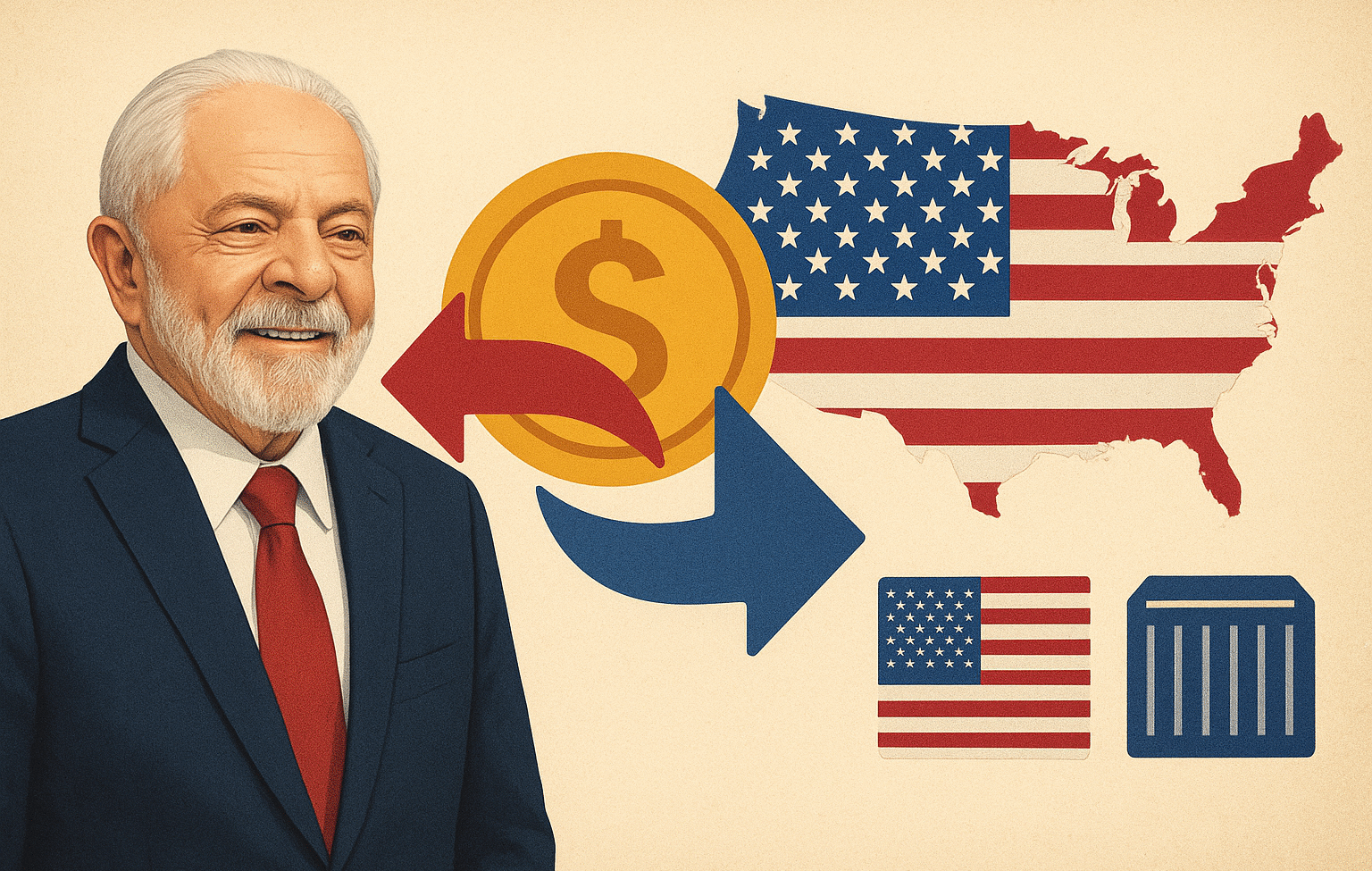
Lula celebrates the trade change with the US: end of the tariff war?

The White House revokes 40% tariffs on key Brazilian products after months of diplomatic tension. Lula responds with pragmatism and geoeconomic vision.
In an unexpected turn of events, US President Donald Trump has revoked the additional 40% tariffs that had been imposed on Brazilian products such as meat, coffee, and fruit since August. This measure, initially imposed in retaliation for the conviction of former President Jair Bolsonaro for attempted coup, had severely strained relations between the continent’s two largest democracies.
Brazilian President Luiz Inácio Lula da Silva, far from responding with hostility, opted for a strategy of diplomatic restraint. “I don’t make decisions with a fever of 39 degrees Celsius,” Lula quipped, alluding to his composure in the face of international pressure.
The official Brazilian narrative presents the decision as a triumph of mutual respect. But the underlying reality reveals a more complex maneuver: Trump imposed the tariffs following internal pressure led by Eduardo Bolsonaro, the former president’s son, who sought sanctions against Lula’s government. The reversal, however, comes after a series of meetings between the two leaders—at the UN and later in Kuala Lumpur—that reportedly fostered excellent personal rapport.
This thaw is no coincidence: both leaders face domestic challenges and seek to project international stability. For Trump, easing tensions with Brazil can improve his hemispheric image. For Lula, regaining preferential access to the US market is key to sustaining agricultural growth and containing inflationary pressures.
• Brazilian exporters celebrate the lifting of tariffs as a breath of fresh air after months of uncertainty.
• The agribusiness sector, especially in meat and fruit, is regaining competitiveness against suppliers like Mexico and Colombia.
• International investors interpret the move as a sign of détente and predictability in bilateral trade policy.
The revocation of tariffs is not just an economic gesture: it is a sign that strategic diplomacy still has a place in a polarized world. Lula has shown that patience and geopolitical calculation can bear fruit even with unpredictable leaders. But the real challenge will be to institutionalize this truce and turn it into a stable, transparent, and mutually beneficial trade relationship.