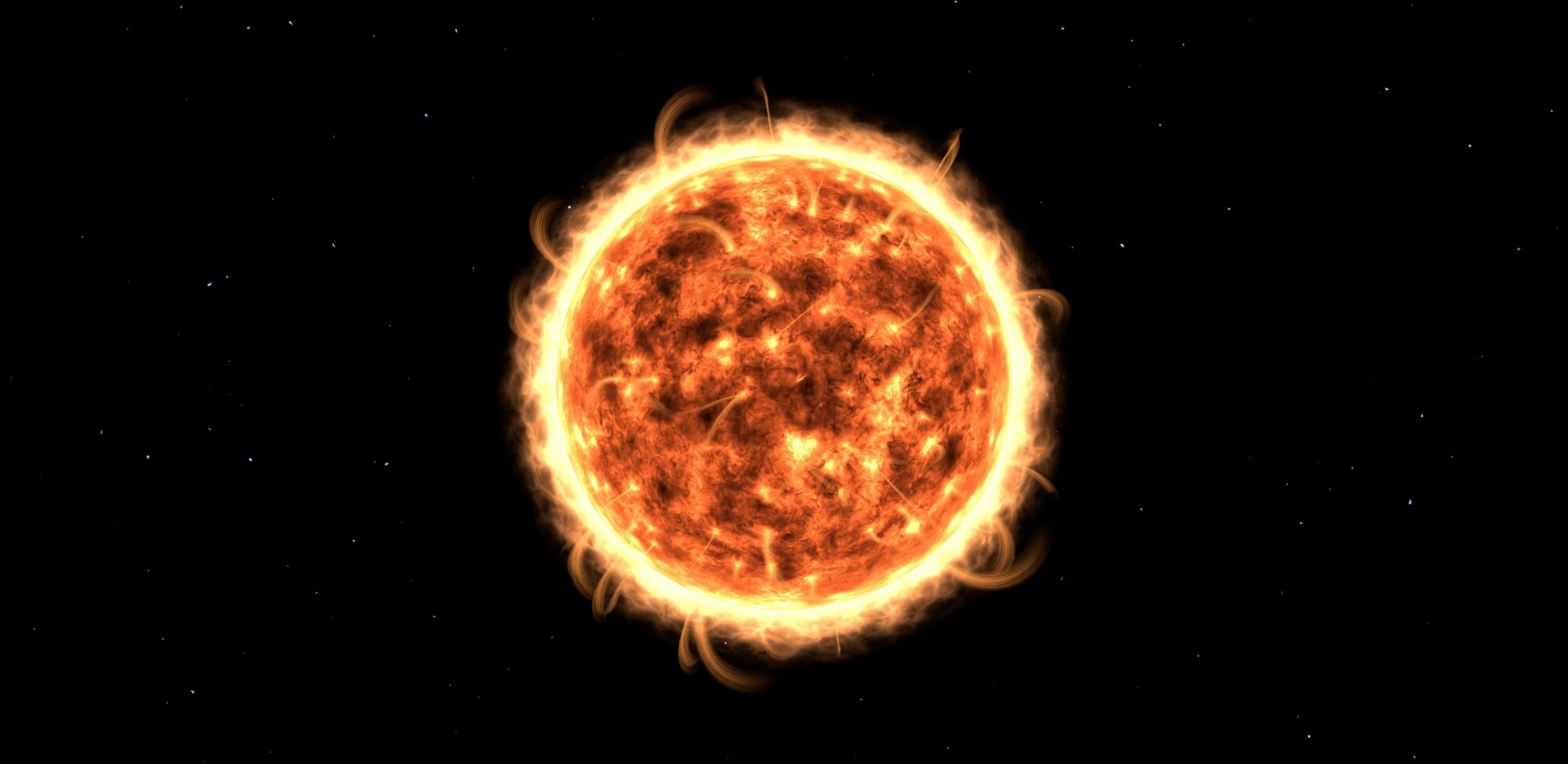
An X5.1 class solar storm shakes the Earth

The most dangerous natural laboratory in the solar system reminds us of its power once again.
On November 11, 2025, the Sun issued a cosmic warning: an X5.1-class solar flare, one of the most intense of the current cycle, followed by a coronal mass ejection (CME) at 1,500 km/s. The European Space Agency (ESA) confirmed that the impact reached Earth between the night of November 12 and the early morning of November 13, triggering a G4-level geomagnetic storm with the potential to disrupt satellites, power grids, and global navigation systems.
But this was not an isolated anomaly. It was the third consecutive coronal mass ejection (CME) from the same active solar region (NOAA AR 14274), suggesting a chain of events that could amplify their effects if the ejections merge in interplanetary space. The result: a highly charged space environment, with impacts ranging from communications interference to increased atmospheric drag on low-Earth orbit satellites.
But this was not an isolated anomaly. It was the third consecutive coronal mass ejection (CME) from the same active solar region (NOAA AR 14274), suggesting a chain of events that could amplify their effects if the ejections merge in interplanetary space. The result: a highly charged space environment, with impacts ranging from communications interference to increased atmospheric drag on low-Earth orbit satellites.
Aware of current limitations in prediction, the ESA is developing missions such as Vigil (Lagrange L5, launch in 2031) and Shield (proposed to operate 15 million km from Earth), which promise to extend the current 20-minute warning window to more than two hours. This would allow infrastructure operators to make critical decisions in advance: shutting down satellites, rerouting polar flights, or isolating vulnerable power grids.